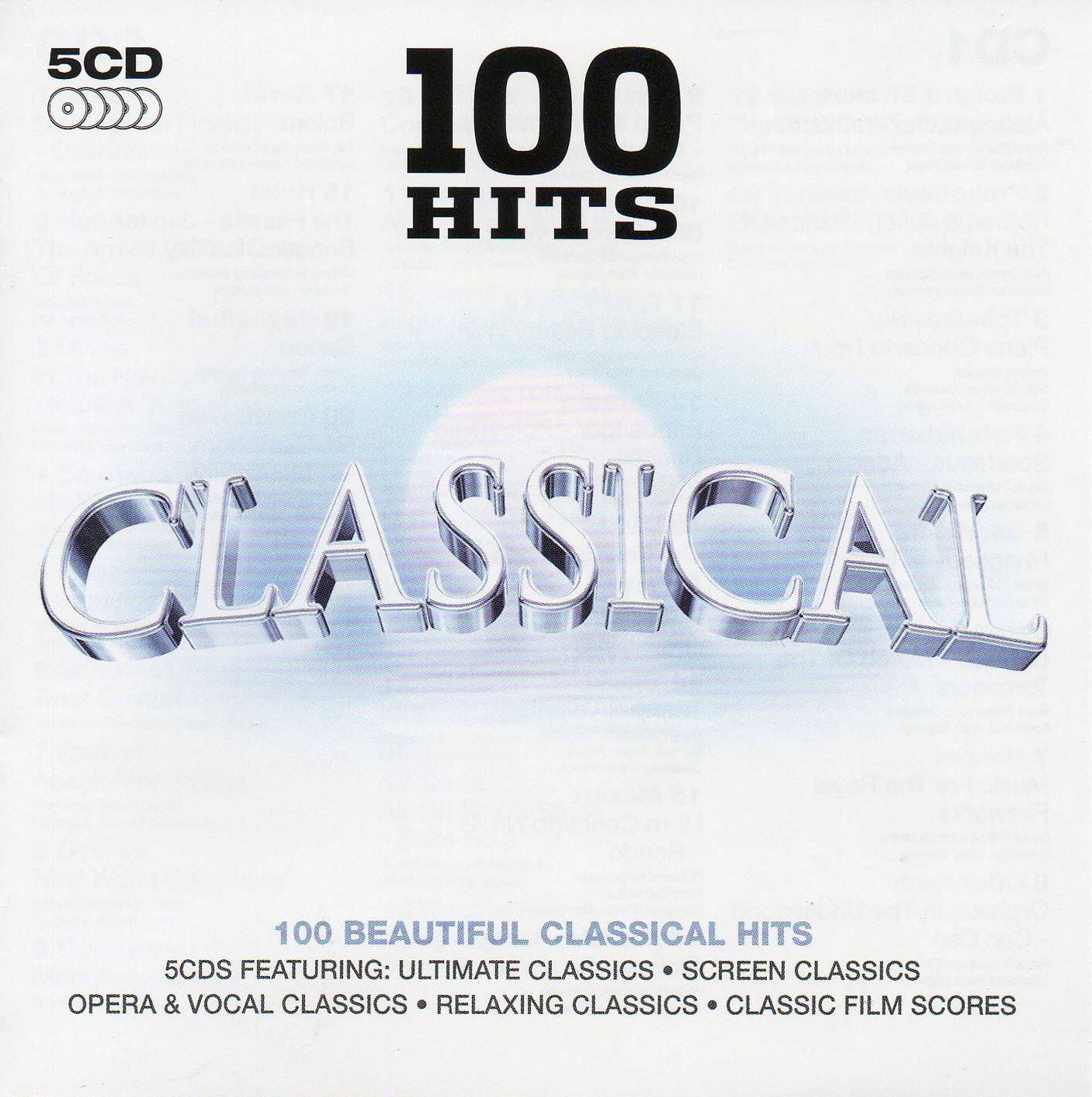
100 Hits: Classical

~ Veröffentlichung von Various Artists (alle Versionen dieser Veröffentlichung ansehen, eine vorhanden)

Anmerkung

I suspect this release contains Alred Sholz budget recordings. As well as a few credited to known but exclusive pseudonyms, some of the others are credited to real artists whose names he sometimes used dishonestly. There are AcoustID matches on some recordings to other recordings with different artist credits. See https://wiki.musicbrainz.org/Budget_recordings_of_Alfred_Scholz

Anmerkung zuletzt geändert am 2021-12-25 16:59 UTC.

Titelliste

1CD: Ultimate Classics
2CD: Screen Classics
3CD: Opera & Vocal Classics
Nr.TitelKünstlerBewertungLänge
1Rigoletto: “La Donna è mobile”
Tenor-Gesang und Tenor-Gesang [Duca]:
Willem Verkerk (tenor)
Orchester:
Nürnberger Symphoniker (Alfred Scholz pseudonym) und The Nuremberg Symphony Orchestra (Nürnberger Symphoniker, the real orchestra)
conductor:
Alexander Pitanic (Alfred Scholz pseudonym)
recording of:
Rigoletto: Atto III. “La donna è mobile” (Duca)
Komponist(in):
Giuseppe Verdi (Italian opera composer) (bis 1851-03-11)
Librettist:
Francesco Maria Piave (bis 1851-03-11)
Teil von:
Rigoletto: Atto III
Giuseppe Verdi2:14
2The Barber of Seville: "Largo al factotum”
Baritongesang und Baritongesang [Figaro]:
Rudolf Knoll (operatic baritone)
Orchester:
The European Philharmonic Orchestra (an Alfred Scholz pseudonym, NOT the Austrian orchestra of the same name), Nuremberg Symphony Orchestra (Nürnberger Symphoniker, the real orchestra) und Nürnberger Symphoniker (Alfred Scholz pseudonym)
conductor:
Hans-Peter Gmur (fictitious conductor, Alfred Scholz pseudonym)
recording of:
Il barbiere di Siviglia: “Largo al factotum” (Figaro) (catch-all for arrangements)
Komponist(in):
Gioachino Rossini (composer)
Arrangement von:
Il barbiere di Siviglia: Atto I, N°2. Cavatina “Largo al factotum” (Figaro) (Arie des Figaro)
recording of:
Il barbiere di Siviglia: Atto I, N°2. Cavatina “Largo al factotum” (Figaro) (Arie des Figaro)
Komponist(in):
Gioachino Rossini (composer)
Librettist:
Cesare Sterbini
Teil von:
Il barbiere di Siviglia: Atto I
Gioachino Rossini5:01
3Carmen: Toreadors SongGeorges Bizet4:02
4La Traviata: Brindisi - Drinking Song
Soprangesang und Soprangesang [Violetta]:
Ute Herbert (soprano)
Tenor-Gesang und Tenor-Gesang [Alfredo]:
Willem Verkerk (tenor)
Orchester:
The Nurenberg Symphony Orchestra (Alfred Scholz pseudonym)
conductor:
Alexander Pitamic (Alfred Scholz pseudonym) und Nils Grevillius (Swedish conductor and violinist)
recording of:
La traviata: Atto I. Brindisi “Libiamo, ne’ lieti calici” (Alfredo, Coro, Violetta)
Komponist(in):
Giuseppe Verdi (Italian opera composer)
Librettist:
Francesco Maria Piave
Teil von:
La traviata: Atto I (La traviata: Act I)
Giuseppe Verdi3:05
5Madame Butterfly: The Humming Chorus
Chorgesang:
Chorus of the Munich State Opera (Alfred Scholz related)
recording of:
Madama Butterfly: Atto II. Coro a bocca chiusa (Humming Chorus)
Komponist(in):
Giacomo Puccini (Italian composer)
Librettist:
Giuseppe Giacosa und Luigi Illica
Teil von:
Madama Butterfly: Atto II (Madame Butterfly: Act II, also: Atto II, parte 1)
Giacomo Puccini3:00
6Nabucco: Chorus of the Hebrew Slaves
Chorgesang:
Bulgarian National Choir (Bulgarischer Nationalchor „Svetoslav Obretenov“) und Chorus of the Munich State Opera (Alfred Scholz related)
Orchester:
Nürnberger Symphoniker (Alfred Scholz pseudonym) und Sofia Philharmonic Orchestra (Philharmonisches Orchester Sofia)
conductor:
Emil Tabakov (conductor), Georgi Robev (conductor) und Hanspeter Gmür (fictitious conductor, Alfred Scholz pseudonym)
recording of:
Nabucco: Parte III, scena 2. Coro “Va, pensiero, sull’ali dorate” (Coro) (Chorus of the Hebrew Slaves)
Komponist(in):
Giuseppe Verdi (Italian opera composer) (in 1841)
Librettist:
Temistocle Solera
Teil von:
Nabucco: Parte III. La profezia
Giuseppe Verdi5:17
7Lakmé: The Flower DuetLéo Delibes2:38
8Gianni Schicchi: “O mio babbino caro”
Produzent(in):
Walter Jellinek (British classical producer) und Walter Legge (British classical producer)
Soprangesang:
Maria Callas (soprano) (von 1954-09-15 bis 1954-09-16)
Orchester:
Philharmonia Orchestra (London orchestra, known as New Philharmonia Orchestra from 1964–1976) (von 1954-09-15 bis 1954-09-16)
conductor:
Tullio Serafin (conductor) (von 1954-09-15 bis 1954-09-16)
Tonmeister(in):
Robert Beckett (classical recording engineer, EMI mainly)
phonographisches Urheberrecht (℗) von:
EMI Records Ltd. (not for release label use! UK parent of EMI‐owned labels until Sept 2012) (in 1954)
aufgenommen bei:
Watford Town Hall (Watford Colosseum, fka the Watford Town Hall Assembly Rooms 1939–1994, as CTS Colosseum since 1995, and as Watford Colosseum since 2011) in Watford, Hertfordshire, England, Vereinigtes Königreich (von 1954-09-15 bis 1954-09-16)
recording of:
Gianni Schicchi: “O mio babbino caro” (Lauretta) (von 1954-09-15 bis 1954-09-16)
Komponist(in):
Giacomo Puccini (Italian composer)
Librettist:
Giovacchino Forzano
publisher:
Casa Ricordi BMG S.p.A. und G. Ricordi & Co. (London) Ltd. (UK division)
Teil von:
Gianni Schicchi
Giacomo Puccini2:33
9The Pearl Fishers: “Au fond du temple saint”
recording engineer:
Lewis Layton (engineer)
Produzent(in):
Richard Mohr (producer)
Baritongesang [Zurga]:
Robert Merrill (American operatic baritone) (am 1951-01-03)
Tenor-Gesang [Nadir]:
Jussi Björling (tenor) (am 1951-01-03)
Orchester:
RCA Victor Symphony Orchestra (am 1951-01-03)
conductor:
Renato Cellini (conductor) (am 1951-01-03)
phonographisches Urheberrecht (℗) von:
BMG Music (in 1951)
aufgenommen bei:
RCA Victor Studios (Midtown New York (A,B,C,D,E,F)) in New York, New York, Vereinigte Staaten (am 1951-01-03)
recording of:
Les Pêcheurs de perles : Acte I. No. 2 Duo « Au fond du temple saint » (Zurga, Nadir) (am 1951-01-03)
Komponist(in):
Georges Bizet (French composer) (von 1863-04 bis 1863-08)
Librettist:
Michel Carré (librettist) und Eugène Cormon
Teil von:
ABC Classic 100 (2001) (Nummer: 7)
Teil von:
Les Pêcheurs de perles : Acte I
Georges Bizet4:37
10Aida: Atto I, scena 1. Romanza “Se quel guerrier io fossi! ... Celeste Aida” (Radamès)
Tenor-Gesang:
Jussi Björling (tenor)
Orchester:
Royal Opera Orchestra Stockholm (Royal Swedish Opera Orchestra, The Royal Court Orchestra)
conductor:
Nils Grevillius (Swedish conductor and violinist)
recording of:
Aida: Atto I, scena 1. Recitativo “Se quel guerriero io fossi!” … Romanza “Celeste Aida” (Radamès)
Komponist(in):
Giuseppe Verdi (Italian opera composer) (in 1871)
Librettist:
Antonio Ghislanzoni (in 1870)
Teil von:
Aida: Atto I
Giuseppe Verdi4:56
11La Bohème: “Che gelida manina”
Tenor-Gesang und Tenor-Gesang [Rodolfo]:
Jussi Björling (tenor)
Orchester:
RCA Orchestra, Royal Opera Orchestra Stockholm (Royal Swedish Opera Orchestra, The Royal Court Orchestra) und The Stockholm Symphony Orchestra
conductor:
Nils Grevillius (Swedish conductor and violinist) und Renata Cellini (conductor)
recording of:
La bohème: Atto I, no. 6. “Che gelida manina!” (Rodolfo)
Komponist(in):
Giacomo Puccini (Italian composer) (in 1896)
Librettist:
Giuseppe Giacosa und Luigi Illica
Teil von:
La bohème: Atto I. In soffitta (La bohème: Act I, Puccini)
Giacomo Puccini5:04
12Turandot: “Nessun dorma”
Produzent(in):
Inger Forsblom und Lars Tocklin
Tenor-Gesang:
Jussi Björling (tenor) (in 1944)
Orchester:
Royal Opera Orchestra Stockholm (Royal Swedish Opera Orchestra, The Royal Court Orchestra) und The Stockholm Symphony Orchestra
conductor:
Nils Grevillius (Swedish conductor and violinist) (in 1944)
recording of:
Turandot: Atto III, scena 1. Aria “Nessun dorma” (Calaf)
Komponist(in):
Giacomo Puccini (Italian composer) (von 1921-03 bis 1924-03)
Librettist:
Giuseppe Adami und Renato Simoni
publisher:
Casa Ricordi BMG S.p.A. und Ed. G. Ricordi & Cia. SpA (Italian publisher)
Teil von:
Turandot: Atto III (Turandot: Act III)
Giacomo Puccini3:21
13Carmina Burana: O Fortuna
Chorgesang:
The Choir of the Salzburg Mozarteum
Orchester:
The Orchestra of the Salzburg Mozarteum (Salzburg Mozarteum Orchestra)
conductor:
Kurt Prestel (conductor, chorus master)
phonographisches Urheberrecht (℗) von:
The Reader’s Digest Association Limited (not for release label use!) (in 1972)
recording of:
Carmina Burana: Fortuna imperatrix mundi: I. O Fortuna
Komponist(in):
Carl Orff (composer) (in 1936)
publisher:
B. Schott’s Söhne (publisher; do not use as label)
Version von:
O Fortuna (Poem, CB 17)
Teil von:
Carmina Burana: Fortuna Imperatrix Mundi
Carl Orff2:50
14Waltz & Chorus
Pyotr Ilyich Tchaikovsky6:12
15Zadok the Priest
Chorgesang:
Crouch End Festival Chorus
Orchester:
The City of Prague Philharmonic Orchestra (Prager Philharmoniker)
recording of:
The Four Coronation Anthems: “Zadok the Priest”, HWV 258
Komponist(in):
George Frideric Handel (German‐British baroque composer) (in 1727)
Premiere bei:
Westminster Abbey in London (Greater London), England, Vereinigtes Königreich (am 1727-10-11)
Teil von:
Händel-Werke-Verzeichnis (Nummer: HWV 258)
Teil von:
The Four Coronation Anthems
George Frideric Handel5:10
16Hallelujah From Exultate Jubilate
Soprangesang:
Erna Berger (German lyric soprano)
Orchester:
Berlin Philharmonic Orchestra (Berliner Philharmoniker)
conductor:
Karl Forster (chorus master/conductor)
recording of:
Exsultate, jubilate, K. 158a/165: IV. Alleluia
Komponist(in):
Wolfgang Amadeus Mozart (classical composer)
Teil von:
Exsultate, jubilate, K. 158a/165
Wolfgang Amadeus Mozart2:46
17Jesu Joy of Man's Desiring
Orchester:
The London Symphony Orchestra (London Symphony Orchestra)
conductor:
Adrian Leaper (conductor)
recording of:
Kantate, BWV 147 “Herz und Mund und Tat und Leben”: Teil II, X. Choral “Jesus bleibet meine Freude” (Jesu, Joy of Man’s Desiring; catch‐all for arrangements and unknown orchestrations)
Komponist(in):
Johann Sebastian Bach (German Baroque period composer & musician)
Arrangement von:
Kantate, BWV 147 „Herz und Mund und Tat und Leben“: Teil II, X. Choral „Jesus bleibet meine Freude“ (Jesu, Joy of Man’s Desiring)
Johann Sebastian Bach3:27
18Hallelujah Chorus
George Frideric Handel4:35
19Requiem: Dies irae
Orchester:
Mozart Festival Orchestra (Mozart Festivalorchester, an Alfred Scholz pseudonym)
conductor:
Kurt Redel (German flautist and conductor)
recording of:
Requiem in D minor, K. 626: III. Sequenz: a. Dies irae (catch-all for unknown editions)
Komponist(in):
Wolfgang Amadeus Mozart (classical composer) (in 1791)
Teil von:
Requiem in D minor, K. 626 (catch-all for unknown editions)
Wolfgang Amadeus Mozart1:54
20Ode to Joy
Bass-Gesang:
Otto Edelmann (austrian bass-baritone)
Tenor-Gesang:
Hans Hopf (Germanic tenor)
vocals:
Chor der Bayreuther Festspiele (Bayreuth Festival Chorus)
Orchester:
Orchester der Bayreuther Festspiele (Bayreuth Festival Orchestra)
conductor:
Wilhelm Furtwängler (conductor)
teilweise recording of:
Symphony no. 9 in D minor, op. 125 “Choral”: IV. Finale. Presto – Allegro assai (Ode an die Freude / Ode to Joy)
Komponist(in):
Ludwig van Beethoven (German composer) (von 1822 bis 1824)
Librettist:
Friedrich Schiller (German poet and playwright)
quotes lyrics from:
An die Freude
Teil von:
Symphony no. 9 in D minor, op. 125 “Choral”
Ludwig van Beethoven3:58
4CD: Relaxing Classics
5CD: Classic Film Scores

Nennungen

Veröffentlichung

urheberrechtlich geschützt (©) von und phonographisches Urheberrecht (℗) von:Demon Music Group Ltd. (for release labels, use “Demon Music Group”; subsidiary of BBC Studios Distribution) (vom 2008 bis heute)
ASIN:UK: B001CZ5MH8 [Info]
US: B001CZ5MH8 [Info]

Veröffentlichungsgruppe

Teil von:100 Hits (UK Demon Music Group) (Nummer: 23) (Reihenfolge: 54)