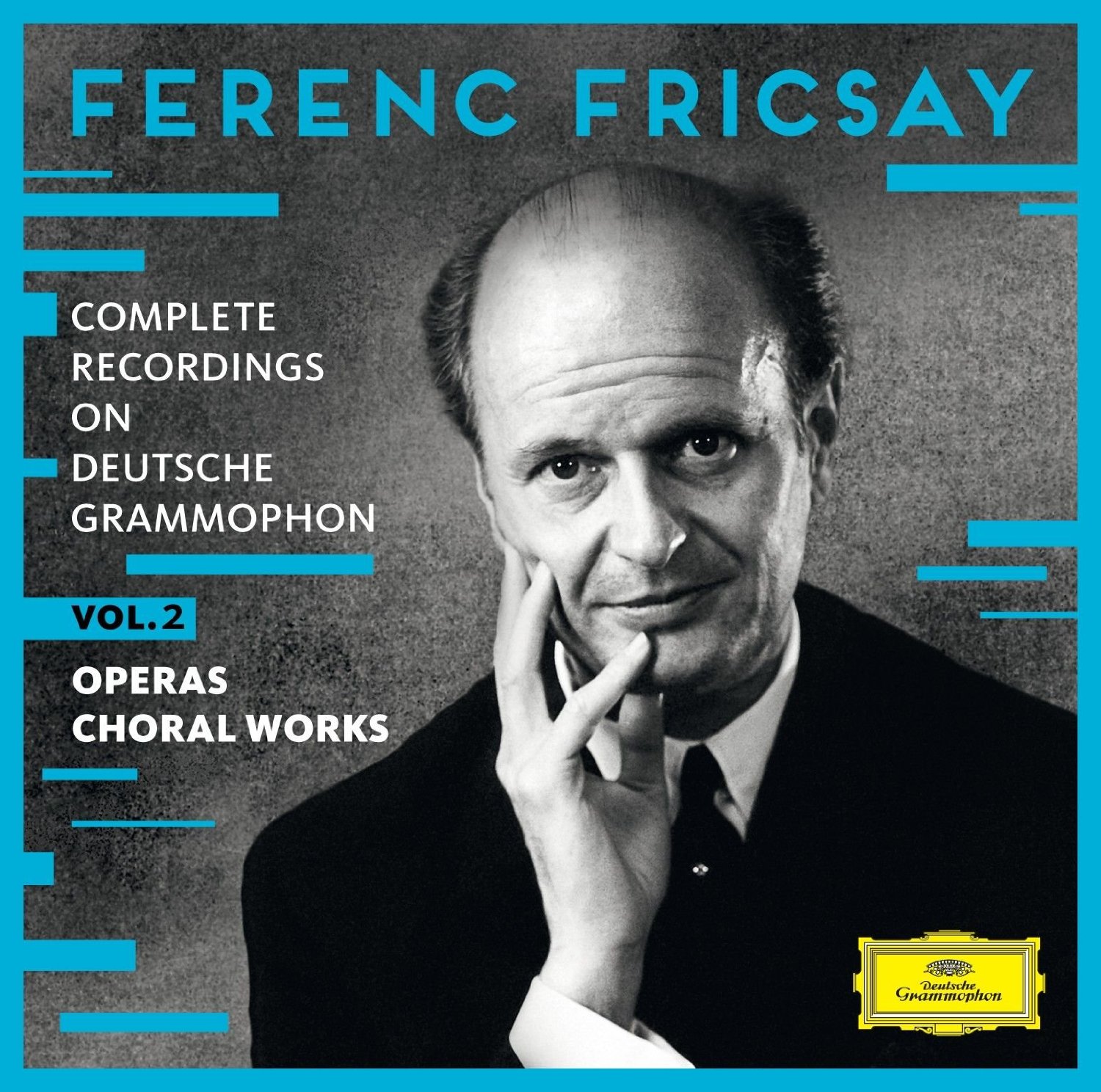
Elenco tracce

1CD: Bartók: Herzog Blaubarts Burg / Cantata profana
2CD: Beethoven: Fidelio(1)
3CD: Beethoven: Fidelio(2)
4CD: Bizet: Carmen
5CD: Gluck: Orpheus und Eurydike(1)
6CD: Gluck: Orpheus und Eurydike(2)
7CD: Haydn: The Seasons(1)
8CD: Haydn: The Seasons(2)
9CD: Haydn: The Seasons(3)
10CD: Haydn: The Seasons(4) / Haydn: Te Deum
11CD: Kodály: Psalmus Hungaricus
12CD: Mendelssohn: A Midsummer Night's Dream
13CD: Mozart: Great Mass in C minor / Laudate omnes gentes / Exsultate, jubilate
14CD: Mozart: Requiem
15CD: Mozart: Die Entführung aus dem Serail(1)
16CD: Mozart: Die Entführung aus dem Serail(2) / Exsultate, jubilate / Arias
17CD: Mozart: The Magic Flute(1)
18CD: Mozart: The Magic Flute(2)
19CD: Mozart: Don Giovanni(1)
20CD: Mozart: Don Giovanni(2)
21CD: Mozart: Don Giovanni(3)
22CD: Mozart: Idomeneo(1)
23CD: Mozart: Idomeneo(2)
24CD: Mozart: Le nozze di Figaro(1)
25CD: Mozart: Le nozze di Figaro(2)
26CD: Mozart: Le nozze di Figaro(3)
27CD: Rossini: Stabat Mater
28CD: J. Strauss II: Die Fledermaus(1)
29CD: J. Strauss II: Die Fledermaus(2) / Voices of Spring
30CD: Igor Stravinsky: Oedipus Rex / Symphony of Psalms
31CD: Verdi: Requiem(1)
32CD: Verdi: Requiem(2)
33CD: Verdi: Requiem(3) / Quattro pezzi sacri
34CD: Wagner: Der fliegende Holländer(1)
35CD: Wagner: Der fliegende Holländer(2)
36CD: Bizet, Gounod, Verdi...:Opera Arias / Orff: Carmina Burana(excerpts)
#TitoloArtistaValutazioneDurata
1Carmen: Couplets: « Votre toast … Toréador, en garde » (Escamillo, chœur)
produttore:
Hans Weber (producer/engineer)
produttore esecutivo:
Prof. Elsa Schiller (Deutsche Grammophon's head of production 1952-1965)
cori:
RIAS-Kammerchor (German chamber choir) (dal 1961-04-17 al 1961-04-21)
voce di baritono [Escamillo]:
Dietrich Fischer‐Dieskau (baritone) (dal 1961-04-17 al 1961-04-21)
orchestra:
Radio-Symphonie-Orchester Berlin (aka RIAS‐Symphonie‐Orchester, 1946–1956 / Radio‐Symphonie‐Orchester Berlin, 1956–1993) (dal 1961-04-17 al 1961-04-21)
direttore d'orchestra:
Ferenc Fricsay (conductor) (dal 1961-04-17 al 1961-04-21)
tecnico di bilanciamento:
Günter Hermanns (producer/engineer)
registrata presso:
Jesus‐Christus‐Kirche (Dahlem) in Berlin, Germania (dal 1961-04-17 al 1961-04-21)
registrazione di:
Carmen : Acte II. No. 14 Couplets « Votre toast, je peux vous le rendre » … « Toréador, en garde ! » (Escamillo, Mercédès, Frasquita, Carmen, Moralès, Zuniga, Lillas Pastia, chœur d’hommes) (“Chanson du toréador”) (dal 1961-04-17 al 1961-04-21)
compositore:
Georges Bizet (French composer)
librettista:
Ludovic Halévy (French librettist) e Henri Meilhac
parte di:
Carmen : Acte II
Georges Bizet4:27
2Faust: Invocation: « Avant de quitter ces lieux » (Valentin)
produttore:
Hans Weber (producer/engineer)
produttore esecutivo:
Prof. Elsa Schiller (Deutsche Grammophon's head of production 1952-1965)
voce di baritono [Valentin]:
Dietrich Fischer‐Dieskau (baritone) (dal 1961-04-17 al 1961-04-21)
orchestra:
Radio-Symphonie-Orchester Berlin (aka RIAS‐Symphonie‐Orchester, 1946–1956 / Radio‐Symphonie‐Orchester Berlin, 1956–1993) (dal 1961-04-17 al 1961-04-21)
direttore d'orchestra:
Ferenc Fricsay (conductor) (dal 1961-04-17 al 1961-04-21)
tecnico di bilanciamento:
Günter Hermanns (producer/engineer)
registrata presso:
Jesus‐Christus‐Kirche (Dahlem) in Berlin, Germania (dal 1961-04-17 al 1961-04-21)
registrazione di:
Faust : Acte II. « Avant de quitter ces lieux » … « Allons, amis » (Valentin, Wagner, Chœur) (Valentin’s Aria) (dal 1961-04-17 al 1961-04-21)
compositore:
Charles Gounod (French composer)
parte di:
Faust : Acte II
Charles Gounod3:41
3Les Pêcheurs de perles: Récitatif et Air: « L’orage s’est calmé … Ô Nadir, tendre ami de mon jeune âge » (Zurga)
produttore:
Hans Weber (producer/engineer)
produttore esecutivo:
Prof. Elsa Schiller (Deutsche Grammophon's head of production 1952-1965)
voce di baritono [Zurga]:
Dietrich Fischer‐Dieskau (baritone) (dal 1961-04-17 al 1961-04-21)
orchestra:
Radio-Symphonie-Orchester Berlin (aka RIAS‐Symphonie‐Orchester, 1946–1956 / Radio‐Symphonie‐Orchester Berlin, 1956–1993) (dal 1961-04-17 al 1961-04-21)
direttore d'orchestra:
Ferenc Fricsay (conductor) (dal 1961-04-17 al 1961-04-21)
tecnico di bilanciamento:
Günter Hermanns (producer/engineer)
registrata presso:
Jesus‐Christus‐Kirche (Dahlem) in Berlin, Germania (dal 1961-04-17 al 1961-04-21)
registrazione di:
Les Pêcheurs de perles : Acte III. No. 11 Entracte, récit et air « L'Orage s'est calmé » ... « Ô Nadir, tendre ami » (Zurga) (dal 1961-04-17 al 1961-04-21)
compositore:
Georges Bizet (French composer) (dal 1863-04 al 1863-08)
librettista:
Michel Carré (librettist) e Eugène Cormon
parte di:
Les Pêcheurs de perles: Acte III
Georges Bizet6:32
4Guglielmo Tell: Aria: “ Resta immobile ” (Tell)
produttore:
Hans Weber (producer/engineer)
produttore esecutivo:
Prof. Elsa Schiller (Deutsche Grammophon's head of production 1952-1965)
voce di baritono [Tell]:
Dietrich Fischer‐Dieskau (baritone) (dal 1961-04-17 al 1961-04-21)
orchestra:
Radio-Symphonie-Orchester Berlin (aka RIAS‐Symphonie‐Orchester, 1946–1956 / Radio‐Symphonie‐Orchester Berlin, 1956–1993) (dal 1961-04-17 al 1961-04-21)
direttore d'orchestra:
Ferenc Fricsay (conductor) (dal 1961-04-17 al 1961-04-21)
tecnico di bilanciamento:
Günter Hermanns (producer/engineer)
registrata presso:
Jesus‐Christus‐Kirche (Dahlem) in Berlin, Germania (dal 1961-04-17 al 1961-04-21)
registrazione di:
Guglielmo Tell: Atto III, scena 3. “Resta immobile, e vêr la terra” (dal 1961-04-17 al 1961-04-21)
compositore:
Gioachino Rossini (composer)
librettista:
Hippolyte Louis-Florent Bis (librettist) e Étienne de Jouy
traduttore:
Calisto Bassi
parte di:
Guglielmo Tell: Atto III
Gioachino Rossini3:05
5La forza del destino: Scena ed Aria: “Morir! Tremenda cosa! … Urna fatale del mio destino” (Don Carlo)
produttore:
Hans Weber (producer/engineer)
produttore esecutivo:
Prof. Elsa Schiller (Deutsche Grammophon's head of production 1952-1965)
voce di baritono [Don Carlo]:
Dietrich Fischer‐Dieskau (baritone) (dal 1961-04-17 al 1961-04-21)
orchestra:
Radio-Symphonie-Orchester Berlin (aka RIAS‐Symphonie‐Orchester, 1946–1956 / Radio‐Symphonie‐Orchester Berlin, 1956–1993) (dal 1961-04-17 al 1961-04-21)
direttore d'orchestra:
Ferenc Fricsay (conductor) (dal 1961-04-17 al 1961-04-21)
tecnico di bilanciamento:
Günter Hermanns (producer/engineer)
registrata presso:
Jesus‐Christus‐Kirche (Dahlem) in Berlin, Germania (dal 1961-04-17 al 1961-04-21)
registrazione di:
La forza del destino: Atto III, scena 2. “Morir! Tremenda cosa!” (Don Carlo) (dal 1961-04-17 al 1961-04-21)
compositore:
Giuseppe Verdi (Italian opera composer)
librettista:
Francesco Maria Piave
parte di:
La forza del destino: Atto III
Giuseppe Verdi7:55
6La traviata: Aria: “Di Provenza il mar, il sol” (Germont)
produttore:
Hans Weber (producer/engineer)
produttore esecutivo:
Prof. Elsa Schiller (Deutsche Grammophon's head of production 1952-1965)
voce di baritono [Germont]:
Dietrich Fischer‐Dieskau (baritone) (dal 1961-04-17 al 1961-04-21)
orchestra:
Radio-Symphonie-Orchester Berlin (aka RIAS‐Symphonie‐Orchester, 1946–1956 / Radio‐Symphonie‐Orchester Berlin, 1956–1993) (dal 1961-04-17 al 1961-04-21)
direttore d'orchestra:
Ferenc Fricsay (conductor) (dal 1961-04-17 al 1961-04-21)
tecnico di bilanciamento:
Günter Hermanns (producer/engineer)
registrata presso:
Jesus‐Christus‐Kirche (Dahlem) in Berlin, Germania (dal 1961-04-17 al 1961-04-21)
registrazione di:
La traviata: Atto II, scena 1. “Di Provenza il mar, il suol” (Germont) (dal 1961-04-17 al 1961-04-21)
compositore:
Giuseppe Verdi (Italian opera composer)
librettista:
Francesco Maria Piave
parte di:
La traviata: Atto II (La traviata: Act II)
Giuseppe Verdi4:39
7Andrea Chénier: Recitativo ed Aria: “Nemico della patria?! … Un dì m’era di gioia” (Gérard)
produttore:
Hans Weber (producer/engineer)
produttore esecutivo:
Prof. Elsa Schiller (Deutsche Grammophon's head of production 1952-1965)
voce di baritono [Gérard]:
Dietrich Fischer‐Dieskau (baritone) (dal 1961-04-17 al 1961-04-21)
orchestra:
Radio-Symphonie-Orchester Berlin (aka RIAS‐Symphonie‐Orchester, 1946–1956 / Radio‐Symphonie‐Orchester Berlin, 1956–1993) (dal 1961-04-17 al 1961-04-21)
direttore d'orchestra:
Ferenc Fricsay (conductor) (dal 1961-04-17 al 1961-04-21)
tecnico di bilanciamento:
Günter Hermanns (producer/engineer)
registrata presso:
Jesus‐Christus‐Kirche (Dahlem) in Berlin, Germania (dal 1961-04-17 al 1961-04-21)
registrazione di:
Andrea Chénier: Atto III. “Nemico della patria?” … “Or io rinnego il santo grido!” (Gérard, L'Incredibile) (dal 1961-04-17 al 1961-04-21)
compositore:
Umberto Giordano (Italian opera composer)
librettista:
Luigi Illica
parte di:
Andrea Chénier: Atto III
Umberto Giordano5:12
8Pagliacci: “Si può? Signore!” (Tonio)
produttore:
Hans Weber (producer/engineer)
produttore esecutivo:
Prof. Elsa Schiller (Deutsche Grammophon's head of production 1952-1965)
voce di baritono [Tonio]:
Dietrich Fischer‐Dieskau (baritone) (dal 1961-04-17 al 1961-04-21)
orchestra:
Radio-Symphonie-Orchester Berlin (aka RIAS‐Symphonie‐Orchester, 1946–1956 / Radio‐Symphonie‐Orchester Berlin, 1956–1993) (dal 1961-04-17 al 1961-04-21)
direttore d'orchestra:
Ferenc Fricsay (conductor) (dal 1961-04-17 al 1961-04-21)
tecnico di bilanciamento:
Günter Hermanns (producer/engineer)
registrata presso:
Jesus‐Christus‐Kirche (Dahlem) in Berlin, Germania (dal 1961-04-17 al 1961-04-21)
registrazione di:
Pagliacci: Prologo. “Si può? Si può?” (Tonio) (dal 1961-04-17 al 1961-04-21)
compositore e librettista:
Ruggero Leoncavallo (composer)
parte di:
Pagliacci: Prologo (Pagliacci: Prologue)
Ruggero Leoncavallo8:01
9Falstaff: »Brav, alter Hans« (Falstaff, Ford, Bardolph)
voce di baritono [Falstaff]:
Josef Metternich (baritone) (il 1951-01-04)
voce di baritono [Ford]:
Dietrich Fischer‐Dieskau (baritone) (il 1951-01-04)
voce di tenore [Bardolph]:
Cornelis van Dijk (classical tenor) (il 1951-01-04)
orchestra:
Radio-Symphonie-Orchester Berlin (aka RIAS‐Symphonie‐Orchester, 1946–1956 / Radio‐Symphonie‐Orchester Berlin, 1956–1993) (il 1951-01-04)
direttore d'orchestra:
Ferenc Fricsay (conductor) (il 1951-01-04)
registrata presso:
Jesus‐Christus‐Kirche (Dahlem) in Berlin, Germania (il 1951-01-04)
registrazione di:
Falstaff: »Brav, alter Hans« (Falstaff, Ford, Bardolph) (il 1951-01-04)
compositore:
Giuseppe Verdi (Italian opera composer)
parte di:
Falstaff
Giuseppe Verdi17:45
10Carmina Burana: II. In taberna: 11. Estuans interius
produttore:
Dr. Fred Hamel
voce di baritono:
Dietrich Fischer‐Dieskau (baritone) (il 1949-12-08)
orchestra:
RIAS-Symphonie-Orchester Berlin (aka RIAS‐Symphonie‐Orchester, 1946–1956 / Radio‐Symphonie‐Orchester Berlin, 1956–1993) (il 1949-12-08)
direttore d'orchestra:
Ferenc Fricsay (conductor) (il 1949-12-08)
tecnico di bilanciamento:
Heinrich Keilholz
registrata presso:
Jesus‐Christus‐Kirche (Dahlem) in Berlin, Germania (il 1949-12-08)
registrazione di:
Carmina Burana: II. In Taberna: XI. Estuans interius (il 1949-12-08)
compositore:
Carl Orff (composer) (nel 1936)
editore:
B. Schott’s Söhne (publisher; do not use as label)
parte di:
Carmina Burana: II. In Taberna
Carl Orff2:12
11Carmina Burana: II. In taberna: 13. Ego sum abbas
produttore:
Dr. Fred Hamel
cori:
Chor der St.-Hedwigs‐Kathedrale (il 1949-12-08) e RIAS-Kammerchor (German chamber choir) (il 1949-12-08)
voce di baritono:
Dietrich Fischer‐Dieskau (baritone) (il 1949-12-08)
orchestra:
RIAS-Symphonie-Orchester Berlin (aka RIAS‐Symphonie‐Orchester, 1946–1956 / Radio‐Symphonie‐Orchester Berlin, 1956–1993) (il 1949-12-08)
direttore d'orchestra:
Ferenc Fricsay (conductor) (il 1949-12-08)
tecnico di bilanciamento:
Heinrich Keilholz
registrata presso:
Jesus‐Christus‐Kirche (Dahlem) in Berlin, Germania (il 1949-12-08)
registrazione di:
Carmina Burana: II. In Taberna: XIII. Ego sum abbas (il 1949-12-08)
compositore:
Carl Orff (composer) (nel 1936)
editore:
B. Schott’s Söhne (publisher; do not use as label)
parte di:
Carmina Burana: II. In Taberna
Carl Orff1:39
12Carmina Burana: II. In taberna: 14. In taberna quando sumus
produttore:
Dr. Fred Hamel
cori:
Chor der St.-Hedwigs‐Kathedrale (il 1949-12-08) e RIAS-Kammerchor (German chamber choir) (il 1949-12-08)
orchestra:
RIAS-Symphonie-Orchester Berlin (aka RIAS‐Symphonie‐Orchester, 1946–1956 / Radio‐Symphonie‐Orchester Berlin, 1956–1993) (il 1949-12-08)
direttore d'orchestra:
Ferenc Fricsay (conductor) (il 1949-12-08)
tecnico di bilanciamento:
Heinrich Keilholz
registrata presso:
Jesus‐Christus‐Kirche (Dahlem) in Berlin, Germania (il 1949-12-08)
registrazione di:
Carmina Burana: II. In Taberna: XIV. In taberna quando sumus (il 1949-12-08)
compositore:
Carl Orff (composer) (nel 1936)
editore:
B. Schott’s Söhne (publisher; do not use as label)
parte di:
Carmina Burana: II. In Taberna
Carl Orff2:46
13Carmina Burana: III. Cour d’amours: 20. Veni, veni, venias
produttore:
Dr. Fred Hamel
cori:
Chor der St.-Hedwigs‐Kathedrale (il 1949-12-08) e RIAS-Kammerchor (German chamber choir) (il 1949-12-08)
orchestra:
RIAS-Symphonie-Orchester Berlin (aka RIAS‐Symphonie‐Orchester, 1946–1956 / Radio‐Symphonie‐Orchester Berlin, 1956–1993) (il 1949-12-08)
direttore d'orchestra:
Ferenc Fricsay (conductor) (il 1949-12-08)
tecnico di bilanciamento:
Heinrich Keilholz
registrata presso:
Jesus‐Christus‐Kirche (Dahlem) in Berlin, Germania (il 1949-12-08)
registrazione di:
Carmina Burana: III. Cour d’amours: XX. Veni, veni, venias (il 1949-12-08)
compositore:
Carl Orff (composer) (nel 1936)
editore:
B. Schott’s Söhne (publisher; do not use as label)
parte di:
Carmina Burana: III. Cour d’amours
Carl Orff0:56
14Carmina Burana: III. Cour d’amours: 21. In trutina
produttore:
Dr. Fred Hamel
voce di soprano:
Anny Schlemm (soprano) (il 1949-12-08)
orchestra:
RIAS-Symphonie-Orchester Berlin (aka RIAS‐Symphonie‐Orchester, 1946–1956 / Radio‐Symphonie‐Orchester Berlin, 1956–1993) (il 1949-12-08)
direttore d'orchestra:
Ferenc Fricsay (conductor) (il 1949-12-08)
tecnico di bilanciamento:
Heinrich Keilholz
registrata presso:
Jesus‐Christus‐Kirche (Dahlem) in Berlin, Germania (il 1949-12-08)
registrazione di:
Carmina Burana: III. Cour d’amours: XXI. In trutina mentis dubia (il 1949-12-08)
compositore:
Carl Orff (composer) (nel 1936)
editore:
B. Schott’s Söhne (publisher; do not use as label)
parte di:
Carmina Burana: III. Cour d’amours
Carl Orff2:02
15Carmina Burana: III. Cour d’amours: 22. Tempus est iocundum
produttore:
Dr. Fred Hamel
cori:
Chor der St.-Hedwigs‐Kathedrale (il 1949-12-08) e RIAS-Kammerchor (German chamber choir) (il 1949-12-08)
voce di baritono:
Dietrich Fischer‐Dieskau (baritone) (il 1949-12-08)
voce di soprano:
Anny Schlemm (soprano) (il 1949-12-08)
orchestra:
RIAS-Symphonie-Orchester Berlin (aka RIAS‐Symphonie‐Orchester, 1946–1956 / Radio‐Symphonie‐Orchester Berlin, 1956–1993) (il 1949-12-08)
direttore d'orchestra:
Ferenc Fricsay (conductor) (il 1949-12-08)
tecnico di bilanciamento:
Heinrich Keilholz
registrata presso:
Jesus‐Christus‐Kirche (Dahlem) in Berlin, Germania (il 1949-12-08)
registrazione di:
Carmina Burana: III. Cour d’amours: XXII. Tempus est iocundum (il 1949-12-08)
compositore:
Carl Orff (composer) (nel 1936)
editore:
B. Schott’s Söhne (publisher; do not use as label)
parte di:
Carmina Burana: III. Cour d’amours
Carl Orff2:21
37CD: Interviews with Ferenc Fricsay
38DVD-Video: Dukas: The Sorcerer's Apprentice / Kodály: Háry János Suite

Accreditamenti

Pubblicazione

fabbricata a:EU (Europa)
fotografia:Erich Auerbach (photographer) (incarico: box photo left side © Erich Auerbach)
Hugo Jehle (photographer) (incarico: box photo right side © Hugo Jehle)
Legrand (photo studio) (incarico: box cover photo © Legrand)
diritti fonografici (℗) detenuti da:Deutsche Grammophon GmbH (this is the company; for release labels, use “Deutsche Grammophon”) (nel 2015)
Discogs:https://www.discogs.com/release/11744322 [info]
ASIN:UK: B00W6ET93W [info]
voce della discografia:http://www.deutschegrammophon.com/en/cat/4794641 [info]

Gruppo di pubblicazioni

Allmusic:https://www.allmusic.com/album/mw0002850740 [info]